Have you ever walked out of a meeting and thought, “Well, that was an hour I’ll never get
back?”
I work with a lot of community coalitions. In our rural communities, there are only so many
people, so some weeks it feels like we’re all playing musical chairs. We go from one meeting to the next and see the same faces and hear the same updates. It’s a lot of “sit and get.” No wonder people dread meetings.
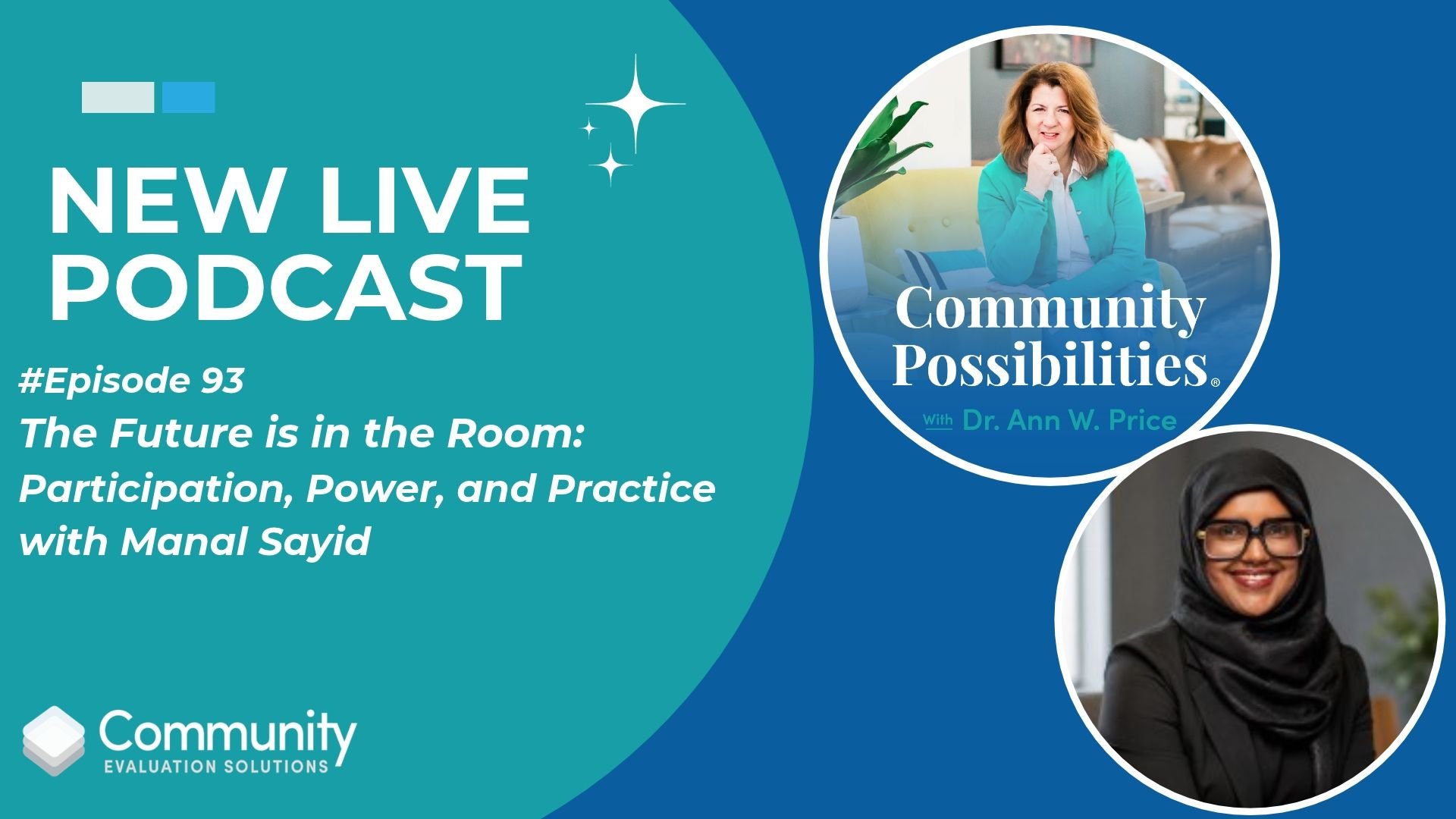
That’s why I was so glad to sit down with Manal Sayid on the latest episode of the Community Possibilities Podcast. Manal is president and lead facilitator of Sayid Consulting in Ottawa, Canada. Her work focuses on facilitation, participation, strategic planning, and what she calls, “the often-unexamined role of power in how we gather, make decisions, and work together.”
Manal asked a question that has stayed with me ever since. When we come together, are we practicing the future we say we want?
Here are a few ideas from our conversation that I keep coming back to.
Consultation is not participation
Manal is especially interested in “what it takes to move beyond performative inclusion and create processes where people can meaningfully influence outcomes” That phrase, performative inclusion, resonated with me.
As Manal put it, we can ask a hundred people for their opinions and still make the exact decision we planned to make. Inviting input is not the same as letting it shape the outcome. The real test is whether what people contributed had a chance to change the result.
One practice I loved is making influence explicit from the start. Manal’s team develops a communication plan alongside the work plan, so people know how their input will be used and how much say they have in the decision. That’s honest, and it builds trust.
Four questions every meeting should answer
Manal teaches a training for people who convene partners but have never had facilitation training. It’s built around four questions:
• What kind of conversation are we having? Are we making sense of something, brainstorming, or making a decision?
• How do we structure the conversation so the group can get somewhere?
• What happens when it doesn’t go as planned? Conflict will show up. Are we ready forit?
• What activity actually serves this group? This is where the icebreaker finally comes in, and only if it fits.
Notice that activities come last. How often do we start with the icebreaker and hope the rest
works itself out?
Don’t rush to solutions
I’ve heard people say psychological safety is just about not wanting to feel uncomfortable. Manal sees it differently. It’s about whether people can show up honestly without paying a personal or professional price. Can I disagree with someone who has more authority than I do?
Can I admit a mistake?
When I asked Manal for one tip for community leaders, her answer went right to the heart of
this:
“Do not rush to solutions before you have created the conditions for people to tell you what is really happening. Some of the most important information in a community or organization lives in the things people are hesitant to say out loud. Good leadership is not only about having answers; it is about creating enough trust, curiosity, and space to hear what you may not have expected.”
How many of us, myself included, have jumped to the action plan before anyone felt safe enough to name the real problem?
Listening means being willing to be changed
This one hit home for me as an evaluator. Manal said we often confuse listening with collecting input. We run surveys, host town halls, and hold focus groups. Then the information disappears and people never hear back.
Real listening means being willing to be changed by what we hear. It also means closing the loop. Tell people what themes came up, what you’re doing with them, and what you can’t do.
A shared vision isn’t a shared practice.
We also talked about collaboration. Manal described a project with a faith-based organization, nonprofit housing providers, and housing developers. All three shared the same vision of solving the housing crisis. What they didn’t have was a shared way of working together.
Real collaboration means talking honestly about who brings what, who carries the risk, and who has the authority to move things forward. It isn’t about singing kumbaya. It’s about understanding our differences well enough to act together anyway. Manal recommends Adam Kahane’s book Collaborating with the Enemy for anyone who wants to dig deeper.
How we get there matters
Here’s the lesson from Manal that I think every coalition and nonprofit needs to hear:
“A good outcome does not automatically mean the process was good. I have
learned to pay as much attention to how we arrive somewhere as I do to where
we land. Who shaped the conversation? Whose knowledge counted? Who
adapted more than everyone else? Who stayed quiet? Sustainable change is
much more likely when people can see themselves not only in the final decision,
but in the process that created it.”
Every meeting, every planning session, and every coalition gathering is practice. We’re rehearsing the kind of community we’ll become. So the next time you plan a meeting, pause and ask yourself: what am I practicing here?
Connect with Manal: https://sayidconsulting.com/
Listen to the full episode with Manal Sayid on the Community Possibilities Podcast.
Learn more about Manal’s work at sayidconsulting.com.
Wondering what kind of community leader you are? Download our free workbook, What
Kind of Community Leader Are You?, from the resources page at communityevaluationsolutions.com. It includes a short quiz, reflection prompts, and practical tools to help you lead with intention.
Double-click to edit...