The Digital Divide Isn't About Convenience. It's About Dignity.
Have you ever tried to fill out a job application on your phone? Or helped a kid finish homework without a laptop at home? Maybe you've tried to book an appointment through a portal that assumes everyone has broadband.
If any of that sounds familiar, you already understand the digital divide.
It's not about convenience. It's about access, dignity, and whether daily life is even possible without extra friction.
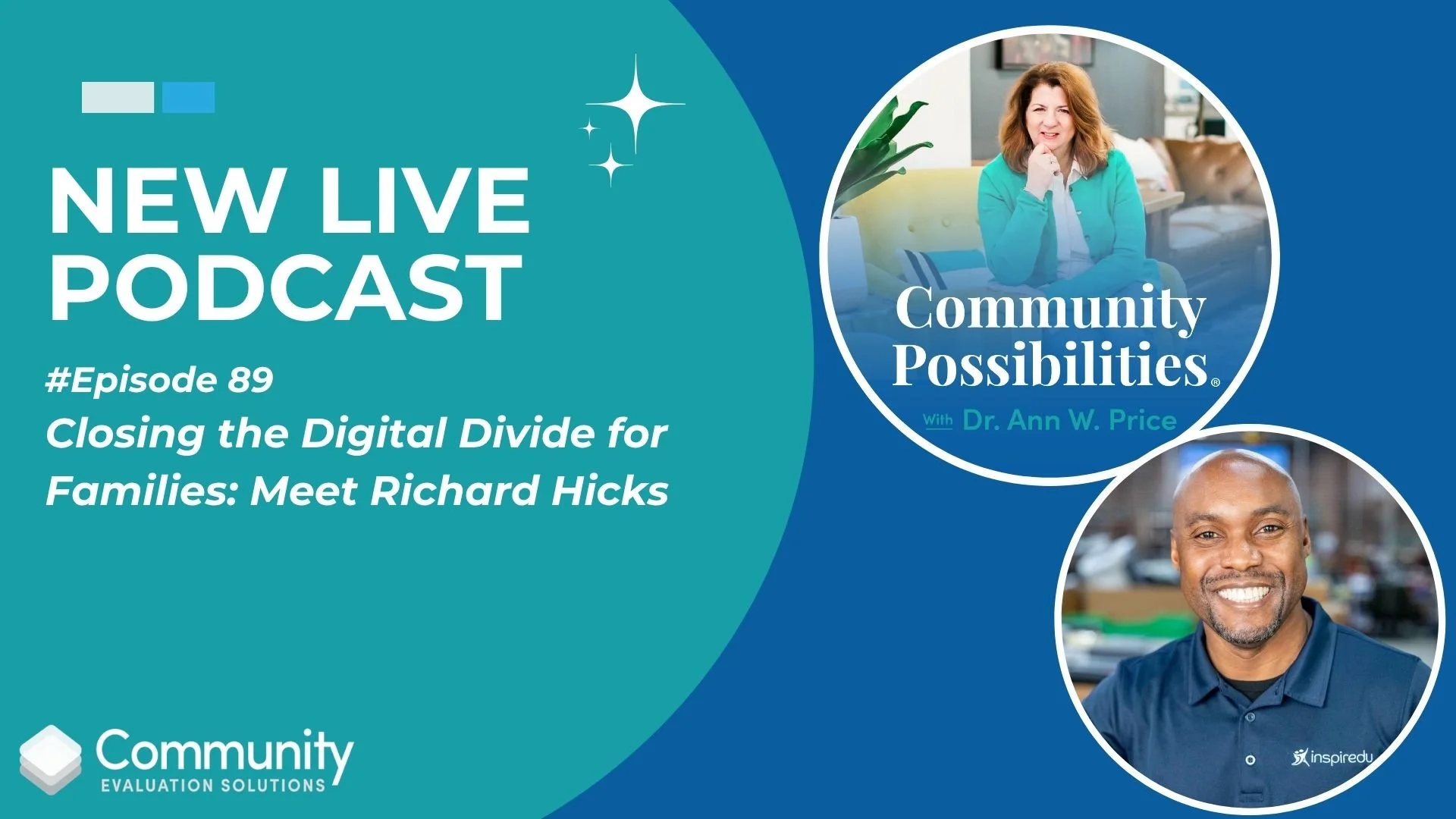
On this episode of Community Possibilities, I sit down with Richard Hicks, CEO and President of Inspire EDU, a Georgia-based nonprofit focused on digital equity, digital inclusion, and digital literacy for families who need it most.
Richard has a phrase I love. He calls Inspire EDU a technology version of the food bank.
Think about what that means in practice:
• Refurbishing and redistributing devices
• Diverting laptops from landfills instead of letting them pile up
• Pairing every device with training, so families can use what they receive with confidence
That last part matters as much as the device itself. A laptop without training is just an object. A laptop with training is a doorway.
We also got practical about programs and partnerships. Richard walked me through Inspire EDU's Learning Spark Initiative, which includes:
• Family learning workshops
• Adult digital literacy classes
• A STEM pipeline that introduces young people to coding and real career pathways
We talked about why coalitions matter in this work, how nonprofits can avoid overpromising to the communities they serve, and how measuring outcomes like confidence, support, and real-world usage builds trust with partners and funders.
I think about this conversation every time I hear someone say that access to technology is a nice-to-have. It isn't. It's infrastructure for opportunity.
So, here's my question for you. What would change in your community if every family had a working device and the confidence to use it?
If you care about broadband access, workforce development, sustainable device donations, and community-based solutions that last, this episode gives you a clear model to learn from.
Listen to the full conversation, share it with a community leader in your life, and let me know one idea you want your town to try next.
Want more help? Try our Community Leader Template.
Take care, friend,
Ann
Double-click to edit...